


Georgia Watch News Feed

As we welcome the cooler weather of winter, I think about those who will be struggling to stay warm and pay their winter heating bills. Just a few weeks ago, two men died in their Kennesaw home because they couldn’t afford to pay their power bill. Georgia Power shut off their power, and with temperatures dropping near freezing, they borrowed a generator from a neighbor to keep the electricity on. Unfortunately, generators create carbon monoxide – a silent killer.

This is heartbreaking and happens far too often. Stories like this are the ones that make our work here at Georgia Watch so critical. The ability of someone to afford their utility bills can result in a life or death situation.

Georgia Watch advocates tirelessly for Georgia Power’s 2.3 million customers and Atlanta Gas Light Company’s 1.5 million customers who are often put in this type of situation. We work for lower, fair utility rates, and we stand up for residential and small business customers. We speak up for everyday Georgians, not special interests. The utilities and large customers are well represented by lobbyists and lawyers in the halls of the capitol and at the Public Service Commission.

Throughout 2011, Georgia Watch achieved many victories for consumers Learn more about Georgia Watch and its accomplishments here.

Low-income and senior Georgians who aren’t able to pay their heating bills were given a $10 million boost from state utility regulators this week when the Public Service Commission approved the use of emergency funds to ensure that families and individuals don’t go cold this winter.

Starting in December, these emergency assistance funds will be used to assist with heating bills as well as reconnect heat for those who have had their heat turned off within the last 45 days. The $10 million is coming from the universal service fund that Atlanta Gas Light usually utilizes to extend natural gas pipelines to where new homes and businesses are being built. Money for the fund comes from AGL’s industrial customers and its wholesale services unit, Sequent Energy Management. Learn more about the program and how you can apply for this help.

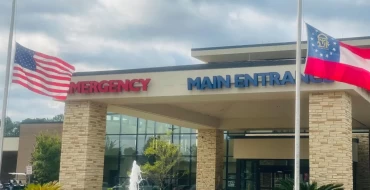
Hospitals are the central component of Georgia’s vast and complicated health care system. As key health care providers that offer a wide range of services, these hospitals have a unique opportunity to help reduce access disparities for vulnerable populations – particularly those that are low-income, uninsured and underinsured. Hospitals are able to address the barriers to affordable care that confront uninsured, underinsured and low-income consumers by working within their facility, the community and lawmakers to enact policies and create programs that will better the fiscal and physical health of their hospitals and patients. Through these programs, hospitals are able to boost the overall fiscal and physical health of its community.

We recently authored a report titled “Georgia nonprofit hospitals and the vulnerable patient,” which provides an analysis of Georgia nonprofit hospitals and community benefit programs. Read the report here.

Approximately 82 percent of Georgia’s hospitals are nonprofit entities, meaning these facilities have particular obligations to their communities due to the tax revenue the community forgoes. The most important way a nonprofit hospital can begin to return the value of its tax-exemption to the community is through direct financial assistance to low-income patients. Well-designed community benefit programs go beyond the hospital walls and into the community itself. Information about community benefit programs are to be reported to the Internal Revenue Service (IRS) via IRS Form 990′s Schedule H, which requires hospitals to disclose key quantitative and qualitative information. Unfortunately, for Fiscal Year 2010, the IRS deemed this disclosure optional. To date, only 24 of Georgia’s nonprofit hospitals have completed this form in a publicly-accessible manner.

In October 2011, we issued a letter to the IRS voicing our concern over the IRS decision and its potential impact on patients. You can read the letter here.

A new provision of the Patient Protection and Affordable Care Act known as medical loss ratio (MLR) provides greater value for consumers by requiring insurance companies to not only disclose how they spend their individual policyholders’ premium dollars but also dedicate at least 80 percent of those paid premium dollars to direct medical care and quality improvement programs for their customers.

Last spring, Georgia’s insurance commissioner, however, requested leniency on behalf of Georgia’s insurance companies to phase in this provision over three years rather than implement it immediately. This request was a tremendous disservice to the Georgians currently insured through individual policies.

Georgia Watch, along with Georgians for a Healthy Future, asked the US Department of Health and Human Services to deny Georgia’s request. We issued public comments to HHS and we authored an issue brief made available to the public. Luckily, our voice was heard, and a middle ground was struck. The Insurance Commissioner’s Office can still phase in the MLR rules, but at a much faster rate, which is a benefit to all Georgia policyholders with individual insurance.  Read more

Even though temperatures are still fairly warm, fall’s much cooler weather is just around the corner! Before you know it we will be turning on our heat to keep warm during the colder fall and winter months. Historically, September has been a good time to lock in a “fixed” natural gas rate (i.e., a rate which remains the same over the term of the contract). If you would prefer not to lock in to a fixed rate contract, you may also choose a gas marketer’s “variable” rate plan which, as its name suggests, varies from month to month, depending on market conditions. The rate may increase, decrease or stay the same from one month to the next. Read more

Court Watch today released its fourth annual report analyzing consumer-related decisions issued by the Supreme Court of Georgia. Court Watch is a project of Georgia Watch, a nonprofit and nonpartisan group committed to strengthening the rights of consumers. The 2010 Court Watch Report identifies and profiles the most noteworthy consumer-related appellate decisions released by the Supreme Court of Georgia throughout the previous calendar year, and identifies notable consumer wins and losses. Read more

August 2, 2011

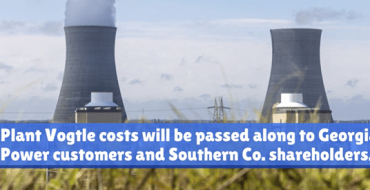
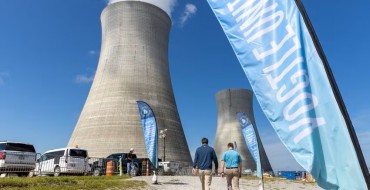
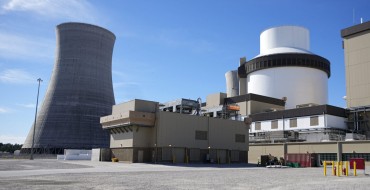
The Public Service Commission has voted unanimously to adopt a settlement that will result in ratepayers’ footing the entire bill for any and all cost overruns incurred during the construction of Plant Vogtle units 3 and 4, while allowing Georgia Power to continue to earn more than 11 percent if such overruns occur.

“This settlement is yet another example of the Public Service Commission caving in to pressure from Georgia Power and placing the financial interests of the utility above those of everyday hardworking Georgians- including thousands of business customers who are Georgia Power ratepayers,” said Georgia Watch Executive Director Angela Speir Phelps, herself a former public service commissioner. Read more

July 29, 2011

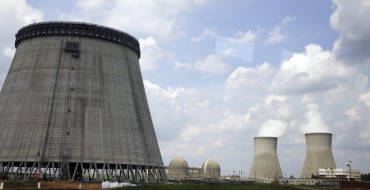
For months, state regulators at the Public Service Commission and attorneys for Georgia Power have been tasked with negotiating a risk sharing mechanism (RSM) to provide some protection for ratepayers in the event of cost overruns for the two new nuclear reactors under construction at Plant Vogtle.

Mere days before a final vote by the PSC, state regulators appear to have caved in to Georgia Power’s staunch opposition to any such mechanism by entering into a settlement agreement with the Company that does no more than re-state Georgia law and current regulatory policy. The settlement expressly provides that PSC staff will withdraw its support of the two risk sharing mechanisms it has previously submitted for Georgia Power’s and the Commission’s consideration. Read more

July 22, 2011

Earlier this week, staff members at the Public Service Commission caved in from pressure by Georgia Power and withdrew its latest “risk sharing mechanism” (RSM) proposal for construction costs of the two new reactors at Plant Vogtle. The Staff RSM would have provided at least a minimal level of protection for Georgia Power ratepayers against massive cost-overruns. Without an RSM, ratepayers will be responsible for paying millions more in early profit in the likely event of construction delays and ballooning costs.

In a brief submitted to the PSC, Georgia Watch Consumer Energy Director Clare McGuire says ratepayers are now unfairly exposed to cost overruns, while Georgia Power shareholders carry little to no risk.

“For Georgia Power to take the position that no RSM whatsoever is necessary when – pursuant to Georgia law – ratepayers are already on the hook for unlimited cost overruns, shows a staggering disregard for ratepayers’ financial well-being, especially when such a stance is taken in the same calendar year in which ratepayers have already been saddled with a 10 percent monthly base rate increase and the imposition of the Nuclear Construction Cost Recovery charge, the combined impact of which is approximately $15 per month for an average use customer.” Read more

July 6, 2011

Georgia Watch intervened today on behalf of ratepayers before the Public Service Commission (PSC) in support of a cost control plan for the construction of two new reactors at Plant Vogtle, near Augusta.

Specifically, Georgia Watch advocated for a risk sharing mechanism (RSM) that spreads the project’s financial burden in the event of cost overruns. This position is also shared by PSC staff. Reports have already indicated that construction is months behind, with additional delays on the horizon due to increased scrutiny by federal regulators. Read more

June 22, 2011

If Plant Washington, the controversial Power4Georgians (P4G) proposed coal-fired power plant becomes a reality, Georgia consumers would see their electric bills skyrocket 10-20 percent in the first year depending on which electric member cooperative (EMC) they receive electricity from, as opposed to an expected two percent increase in the absence of the plant.

That is the main finding of a new Georgia Watch and TR Rose Associates study released today. Titled “Power4Georgians Plant Washington Coal-Fired Power Plant: Too High a Price for Consumers,” the report concludes: “If the proposed plant is built, rate increases will no longer be modest. The plant will also cause long-term financial headaches for the electric membership cooperatives (EMC’s) and others who sign on to purchase power from Plant Washington.”

Read more

June 16, 2011

Georgia Watch, the Campaign for Better Care and Piedmont Healthcare are proud to host “Town Hall Conversation: Safely and Effectively Navigating Healthcare Today” on Tuesday, June 28, from 6 p.m. to 8 p.m. at the Atlanta Community Food Bank. The event will kick off the national Campaign for Better Care’s Healthy Hospital Initiative, which aims to improve patient safety at hospitals and bring about greater clarity when navigating the healthcare market. Read more

Clark Howard speaks about Georgia Watch

"I’m proud to be a Georgia Watch board member because it is the only bonafide group in Georgia looking out for you and me as consumers."
- Clark Howard